

Skip to content
tenant-improvementv2

Tenant Improvement Contractor

A tenant improvement project that runs late or over budget costs more than money. It costs the lease timeline, the tenant relationship, and the property's reputation with future tenants.

KR Wolfe delivers tenant improvement construction across healthcare, government, education, and commercial facilities, with the licensing, bonding, and multi-site experience to keep occupied buildings operating during construction.

Request a Project Estimate

KR Wolfe's Tenant Improvement Process

discovery
Discovery and Scoping
KR Wolfe assesses the space, lease terms, and the tenant's operational requirements before drafting a scope. This step catches conflicts, structural limits, existing mechanical systems, and code requirements before they become change orders mid-construction.
design
Design and Permitting
Design work is coordinated directly with the property's architect or KR Wolfe's own design-build team, depending on the project. Permitting is submitted to the local municipality in parallel with the final design to avoid a stalled schedule.
construction
Construction
Work is phased around the building's occupancy status. In active facilities, KR Wolfe schedules disruptive work, demolition, and systems tie-ins during off-hours to keep the rest of the building operating on its normal schedule.
handoff
Closeout and Handoff
Final inspection, punch list resolution, and system commissioning happen before handoff, so the tenant moves into a space that's fully operational on day one.

What Drives Tenant Improvement Costs

Tenant improvement costs vary by scope, not square footage alone. The factors that move the number the most:

  • Whether the building is occupied or vacant during construction
  • The extent of HVAC, plumbing, or electrical rerouting required
  • Finish level and materials specified by the tenant or landlord
  • Permitting and inspection timelines set by the local municipality
  • Capital equipment installation requirements, if any

A firm number isn't possible until plans are submitted for permitting, but KR Wolfe can scope a project and provide a preliminary range early in planning

tenant-improvement-cost

KR Wolfe in Action

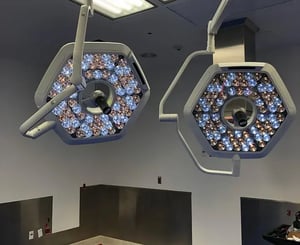
At Sharp HealthCare, KR Wolfe managed the full design-build of a 17,000-square-foot training center, coordinating tenant improvement and demolition work with four Sharp HealthCare project managers throughout the project. The result: a fully customized training facility delivered with minimal disruption to hospital operations. See the full case study.

Our case studies cover additional tenant improvement and renovation work across healthcare, government, and commercial facilities.
kr-wolfe-in-action

Tenant Improvement Contractor vs. General Contractor

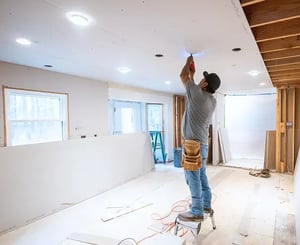
A tenant improvement contractor specializes in interior buildouts for leased commercial space, typically working within an occupied or partially occupied building. A general contractor's scope can include ground-up construction as well as interior work. KR Wolfe operates as both, serving as a general contractor on new construction and as TI contractor on interior buildouts, so the distinction doesn't require a second vendor.
tenant-improvement-contractor-1

Managing Tenant Improvements Across Multiple Locations

Property owners and facilities teams managing more than one site face a different problem than a single-building TI project: keeping scope, budget, and schedule consistent across locations while each site runs its own permitting timeline and building conditions.

KR Wolfe operates from facilities in Incline Village, Nevada, Lakeside, California, and Phoenix, Arizona, and coordinates multi-site TI programs through a single point of contact rather than a separate vendor per location.

managing-tenant-multiple-location

WBENC-Certified, Women-Owned Business

KR Wolfe is a WBENC-certified, women-owned business founded in 2007 by Rachel Wolfe, who serves as President and CEO. The certification meets supplier-diversity requirements for corporate and government procurement teams with diversity-spend mandates.

We’re also a member of AGC and the National Small Business Association. 

Why Choose KR Wolfe as Your Tenant Improvement Contractor

  • Direct experience with wall configuration, capital equipment installation, HVAC/plumbing rerouting, and structural work, like cleanrooms and data centers
  • Licensed and insured general contractor with direct TI experience in healthcare, government, education, and commercial facilities
  • SBA-registered corporation approved for government contracts
  • Single point of contact across multi-site TI programs
  • KR Wolfe serves as a tenant improvement general contractor on turnkey projects, or as a construction manager where the architect is already selected


Ready to Start a Tenant Improvement Project?

Contact our team to discuss project scope, timeline, and budget.


Managing Tenant Improvements Across Multiple Locations?

Talk to our team about a single point of contact across your whole portfolio.


Questions Facilities Teams Ask About Tenant Improvement Contractors

What does a full-service tenant improvement contractor actually handle on a commercial project? A full-service TI contractor manages the interior construction and system changes needed to configure a leased space, including wall configuration, HVAC and plumbing rerouting, capital equipment installation, and permitting coordination with the local municipality, from initial planning through final inspection.
What's the difference between a tenant improvement contractor and a general contractor? A tenant improvement contractor specializes in interior buildouts for leased commercial space, typically working within an occupied or partially occupied building. A general contractor's scope can include ground-up construction as well as interior work. Many firms, including KR Wolfe, operate as both, serving as general contractor on new construction and as TI contractor on interior buildouts.
How do companies manage tenant improvement projects across multiple locations at once? Multi-location TI programs work best through a single contractor who coordinates scope, budget, and schedule across all sites, rather than separate vendors per location. That keeps standards consistent even though permitting timelines and building conditions vary by site.