Skip to content
hero-surgical-light-installation

Surgical Light Installation Services

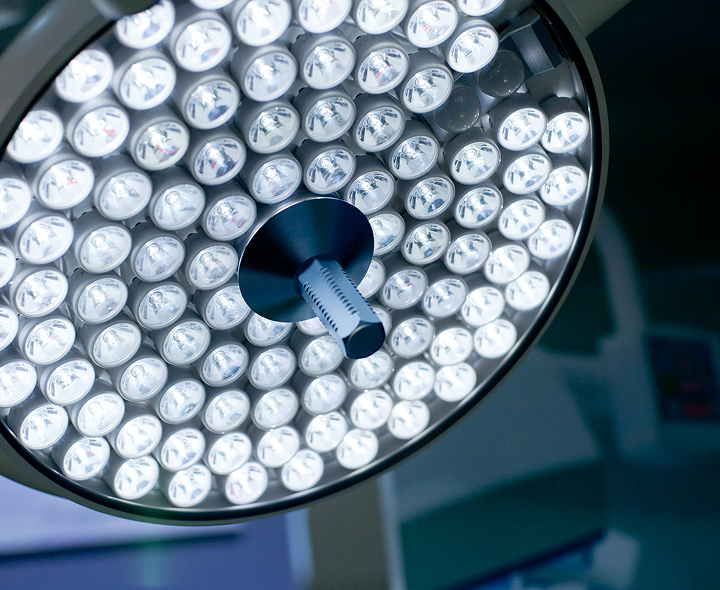
A surgical light hangs over the patient for every case, and the ceiling structure, mount, and power behind it have to be right before the first procedure. KR Wolfe installs and replaces surgical lights in hospital operating rooms and federal medical facilities across the U.S. OSHA-certified technicians with manufacturer-specific training handle the full job: verifying the ceiling structure, removing the old lights, mounting, wiring, and commissioning the new system. It is one part of KR Wolfe's medical equipment installation services, and facilities get a single crew accountable for the room from survey to handoff.
Get in Touch

WHAT SURGICAL LIGHT INSTALLATION REQUIRES BEFORE DAY ONE

A surgical light system hangs from a mounting plate tied into the building structure. The central axis, spring arms, and light heads all hang from that point, and power runs down through it. The work that decides how an install goes happens above the ceiling tile, and KR Wolfe settles it before any equipment arrives.

Confirming the Ceiling Can Carry the Light

KR Wolfe confirms the overhead structure can hold the full weight of the light system and stay rigid while clinicians reposition the light heads during procedures. Where the existing structure falls short, reinforcement goes in before the light does. Some manufacturers' installation instructions require a structural engineer to certify the ceiling attachment before mounting begins.


Dedicated Power Before the Crew Arrives

KR Wolfe checks that a dedicated electrical circuit, with a power drop at the mounting location, is in place before installation starts. The system stays disconnected from mains power while it is mounted, and the flange is grounded before the supply is connected.


What Your Facility Team Provides Before Installation

The KR Wolfe crew needs the room cleared of equipment and one point of contact who coordinates between clinical staff and installers, with dates agreed in advance. Facilities also provide building drawings and photos of the existing supports, and have the dedicated circuit in place before the crew arrives.

Drawings and Measurements the Installer Needs

Before scheduling, KR Wolfe reviews building drawings that show the structure type, ceiling height and truss or crossbeam spacing. Photos of the existing supports and the space above the ceiling fill in what drawings miss. The ceiling-to-roof and ceiling-to-floor heights set the length of the ceiling tube. When the light mounts to a crossbeam, the beam's height and width get measured too.


What KR Wolfe Finds When the Ceiling Opens

Older facilities regularly surface ceiling conditions that do not match the drawings. The site survey catches those mismatches before any equipment arrives, so the fix is planned rather than improvised on install day.

HOW KR WOLFE REPLACES SURGICAL LIGHTS IN ACTIVE OPERATING ROOMS

Replacing surgical lights in a working hospital means one OR comes out of service while the rest keep running cases. KR Wolfe works through each room in the same sequence:

  • Site survey of the ceiling structure, power, and existing lights
  • Removal of the outdated light system
  • Installation of the mounting plate, ceiling tube, central axis and arms
  • Electrical connection and grounding
  • Commissioning and handoff to clinical staff

Crews follow ICRA infection control protocols, so dust and debris from the ceiling work stay contained in the room under construction.

For the Children's Hospital of Philadelphia OR lighting upgrade, KR Wolfe worked as a subcontractor to Stryker across eight operating rooms between October 10 and 27, 2019. A three-person team removed the outdated surgical lighting, installed new lights with in-light cameras, and coordinated each room's schedule with the hospital's facility manager.
Planning a surgical light replacement? Bring KR Wolfe in before the lights arrive, so ceiling structure and power are settled ahead of install day.
CONTACT OUR TEAM

CEILING-MOUNTED, WALL-MOUNTED AND MOBILE SURGICAL LIGHTS

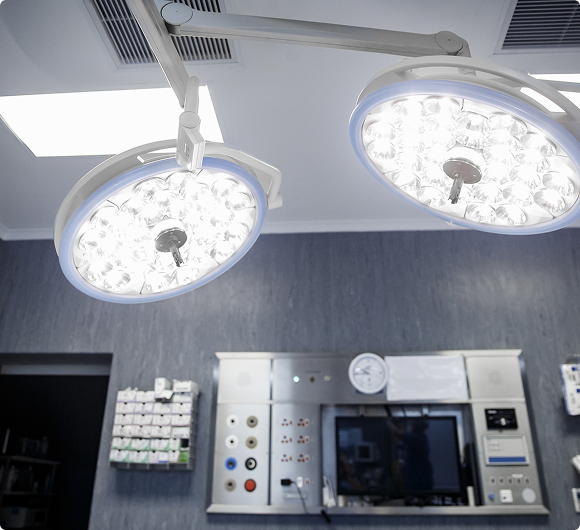
Surgical lights come in three configurations, and each one changes the installation work. Ceiling-mounted lights need the most preparation: structural verification, a mounting plate, a ceiling tube sized to the room, and a dedicated circuit. Wall-mounted lights anchor to the wall instead, so the framing and backing in that wall carry the arm and light head. Mobile surgical lights sit on a rolling stand and need no structural work, only power near the table. The installer confirms the room can support the configuration before the order is final.

WHO INSTALLS SURGICAL LIGHTS IN HOSPITAL OPERATING ROOMS

Hospitals buy surgical lights from the manufacturer, and installation is handled by technicians trained on that specific system. KR Wolfe's technicians are trained directly by each manufacturer. Stryker selected KR Wolfe as an installation and quality-assurance partner and has deployed KR Wolfe technicians at more than 200 hospitals worldwide. Surgical lights and OR lighting systems are among the Stryker product lines covered by KR Wolfe's certified Stryker equipment installation.

The same work extends to federal facilities. KR Wolfe completed a USNS Mercy surgical light replacement covering 25 surgical lights across the hospital ship. It then won an additional contract to replace the surgical lighting in the ship's 12 main operating rooms. Founded in 2007, KR Wolfe is a WBENC-certified, women-owned business.

SURGICAL LIGHT INSTALLATION WITH BOOMS AND OR RENOVATION

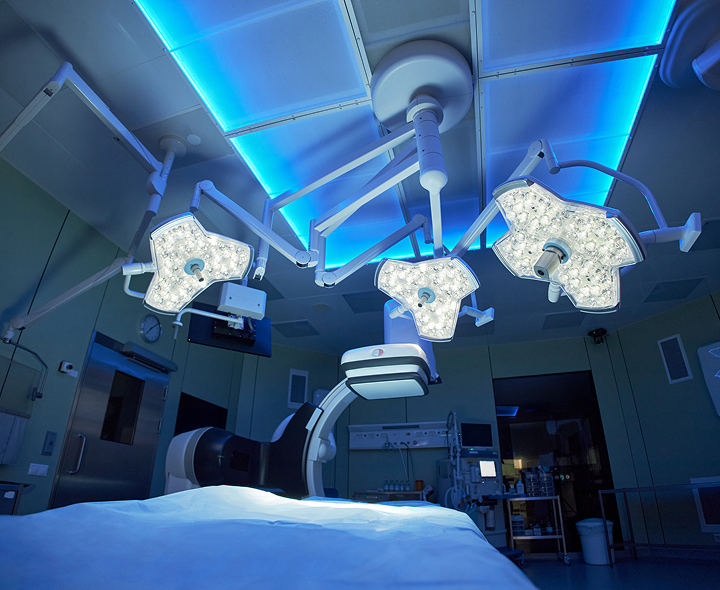
Surgical lights and booms hang from the same overhead structure. A hybrid OR project coordinates both with medical gas, imaging equipment, and modular ceiling infrastructure. One contractor handling the lights alongside surgical boom installation keeps the ceiling work, power, and room schedule under a single plan. Rooms that need a new ceiling grid pair the lights with modular ceiling system installation. Full OR rebuilds run through KR Wolfe's healthcare renovation services.
START YOUR DIGITAL SIGNAGE INSTALLATION PROJECT

Share your room drawings, light model, and target dates with KR Wolfe to start scoping the ceiling structure, power, and OR schedule for your surgical light installation.
CONTACT OUR TEAM

SURGICAL LIGHT INSTALLATION FAQS

What Certifications Do Technicians Need to Install Surgical Lighting? At minimum, OSHA certification plus manufacturer-specific training on the light system being installed. KR Wolfe's technicians hold both, and their training comes directly from each manufacturer.
What Does Surgical Light Installation Require in Terms of Ceiling Structure and Prep?
  • Overhead structure verified to carry the light system, and reinforced where it falls short

  • Building drawings showing ceiling height and truss or crossbeam spacing

  • A dedicated electrical circuit with a power drop at the mounting location

  • A room cleared of equipment before the crew arrives

    Some manufacturers also require a structural engineer to certify the ceiling attachment.

Who Installs Surgical Lights in Hospital Operating Rooms? Technicians trained by the light's manufacturer, working either directly for the OEM or as its installation partner. KR Wolfe installs surgical lights for hospitals and for manufacturers including Stryker, which lists surgical lights and OR lighting systems among the product lines KR Wolfe's technicians are trained on.
What Are the Risks of Using Unqualified Labor for Surgical Light Installation? Improper installation leads to light drift, in which the light head won't hold its position during a procedure, and to equipment damage. Some manufacturers' manuals warn that mounting the system while it is connected to mains power damages the main control board. Any rework takes the OR back out of service.